Regression Assertions That Expose Silent LangGraph Tool Failures Before Wrong Answers Reach Output Nodes
Assertions on state transitions catch tool failures that monitoring misses as success.
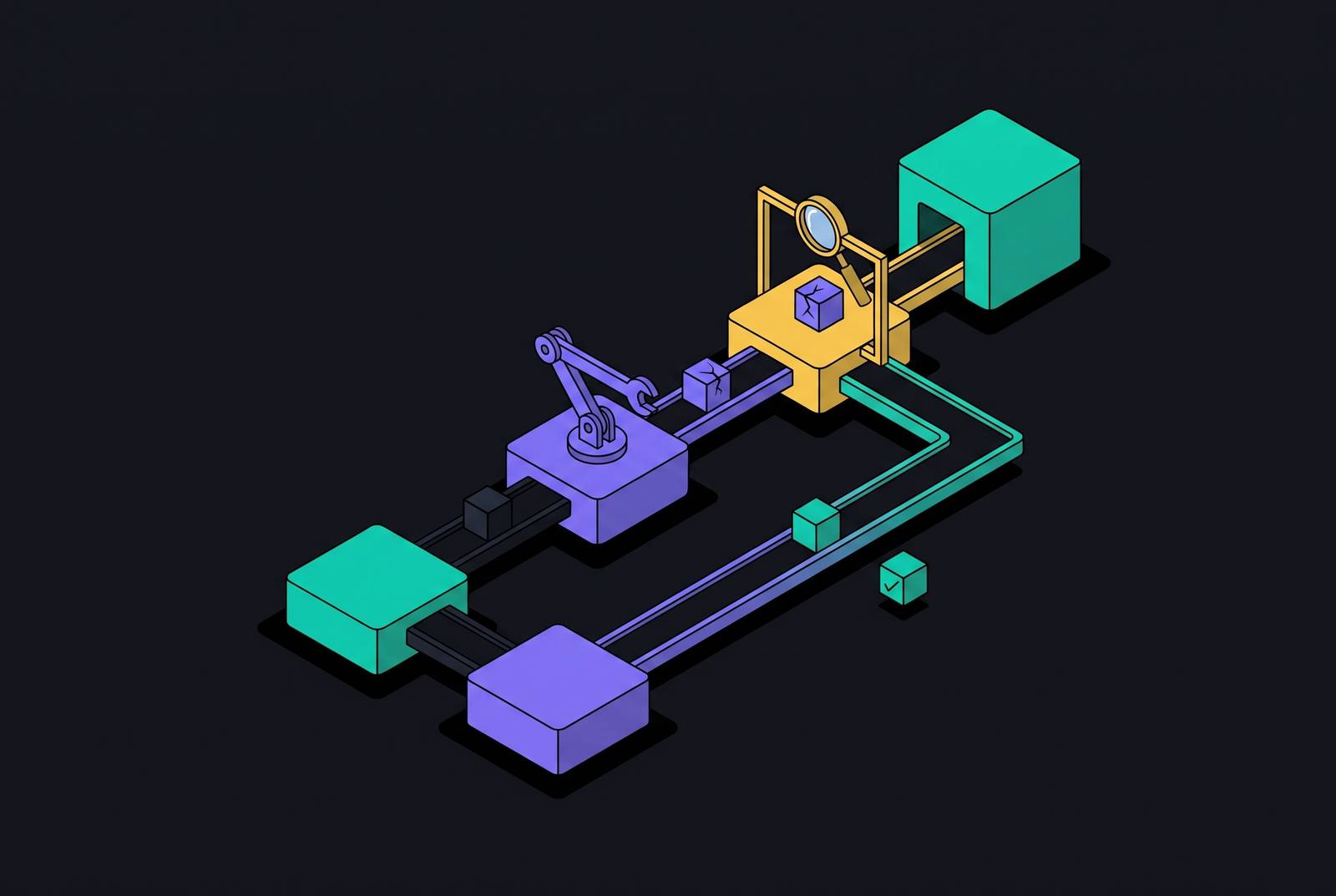
To detect silent tool failures in production multi-agent pipelines, teams need assertions on state transitions as well as checks on final answers. In LangGraph, a tool can return empty or erroneous data while the model produces a plausible response and monitoring records success. A durable regression harness validates tool results, exposes typed errors, checks routing and retries, and replays production traces before faulty transitions reach output nodes.
Why silent tool failures are structurally different from ordinary agent errors
The dashboard is green, but the answer is fabricated. A tool node has returned empty or erroneous data, and the model has supplied a plausible answer while leaving the failure unreported. The execution graph records success because the code completed.
A failed API call that throws a 500, halts processing, and produces a traceback gives monitoring an explicit error to record. By default, an unhandled node exception also halts a LangGraph graph. The silent path begins when developer code swallows that exception and returns a blank string or empty JSON. The model can accept that result and synthesize an answer anyway.
Conventional APM measures execution. It can establish that a node ran without establishing that the returned data supports the next decision. The visible error can also appear far from its origin. A node that suppresses an exception and returns None may cause a downstream node to crash with an AttributeError, concealing the original failure. Both cases break the connection between where the defect began and where the workflow appears to go wrong.
How LangGraph's own framework changes created a silent-failure trap teams didn't see coming
The LangGraph 1.0.x releases showed how changes to the framework can break what teams expect at tool boundaries. In October 2025, langgraph-prebuilt 1.0.2 added a required runtime parameter to ToolNode internals without a migration guide or a DeprecationWarning. The dependency was also not pinned correctly in langgraph==1.0.1. The application code did not have to change. A pip install upgrade could invalidate tests and integrations that had worked for months.
Issue #6397 describes the resulting failure when testing ToolNode outside a compiled graph. Without runtime context, ToolNode.invoke() raises ValueError with the message Missing required config key 'N/A' for 'tools'. Issue #6363 describes a related break in custom asynchronous implementations. The injected runtime keyword argument causes custom ToolNode.afunc overrides without **kwargs to crash with TypeError. These are visible exceptions, but they expose how much tool-boundary behavior depends on framework context.
Issue #6726 documents a separate asynchronous gap in January 2026. asyncio.CancelledError propagates through ToolNode even when handle_tool_errors=True, and no error ToolMessage is created. The failure occurs as INVALID_CHAT_HISTORY when an AIMessage contains tool_calls without a corresponding ToolMessage response. An explicit setting does not remove the need to test the resulting state and message sequence.
Issues #6397 and #6486 remain open as of September 2026 against current LangGraph, including 1.2.11. Taken together, the breakages show why successful execution, error conversion, and runtime context need separate contracts. Some failures stop execution, while others leave incomplete state or become silent when application code suppresses them. Teams cannot infer those contracts from defaults alone.
Three failure categories that regression assertions must be designed to catch
Tool schema drift is the first category. A tool's external interface can change without its registration changing, leaving the graph with an obsolete account of what the tool accepts or does. A schema mismatch may produce a visible runtime error. A description mismatch is harder to detect because the model can choose the tool in the wrong situation without triggering an exception. The description guides that choice, so validating the schema alone leaves the behavioral half of the contract unchecked.
Model changes can disturb the same contract. A prompt that worked with one model may behave differently with another because their RLHF reward calibration differs. The tool can remain available and return valid data while being selected for an unsuitable task. Execution monitoring sees no failed call in that case. The defect lies in the decision to call it.
Workflow loops and semantic drift form the second category. Repeated tool retries can eventually produce a correct answer at multiplied cost, leaving final-answer evaluation satisfied. Longer autonomous workflows create another risk when intermediate tool outputs pollute conversation history. An error mentioning “network timeout” can cause a retriever to flood the prompt with socket-diagnostic tools instead of continuing the database recovery protocol. The workflow still moves, but its purpose has drifted.
Incorrect conditional-edge routing is the third category. A graph can take the wrong branch and still produce a passing answer, making output-node assertions insufficient. The route itself is part of correctness. A drop in routing accuracy at one decision node can signal cost and latency regressions weeks before the final-answer metric changes.
Where in the graph to place assertions and what properties each one must check
Teams should place assertions at four levels to catch these kinds of failures. The first is strict state-transition schema validation immediately after the tool node, before its result returns to the agent. Every response should pass through Pydantic validation before entering state. A compact illustrative pattern is ToolResult.model_validate(raw_output). The schema must reject null or empty responses when the tool contract calls for usable data, making interface drift and empty-result failures visible immediately after the tool node.
Validation must change how the failure is recorded. A rejected payload should become an explicit critical failure rather than a successful graph traversal that happens to contain unusable data. The transition must distinguish a valid tool result from a failed tool result before downstream generation begins.
The second layer represents failures as typed error states. A node should return a graph state with an error field that names a condition such as ToolX_EmptyResponse, rather than raise a standard Python exception that stops execution. Conditional edges can then route to a fallback tool or a graceful user-facing message. Error handling must remain specific. A bare except also swallows KeyboardInterrupt and SystemExit, so handlers should name the error types they intend to convert.
The explicit configuration pattern belongs at this layer. Teams should set ToolNode([my_tool], handle_tool_errors=True) instead of trusting the default, and keep regression tests for the cancellation gap. Runtime compatibility also needs direct treatment. Tests outside a compiled graph should pass runtime=Runtime() explicitly, and custom asynchronous functions should accept **kwargs to absorb injected parameters defensively.
The third layer makes retries checkpoint-safe through conditional edges. An internal while loop bypasses the checkpointer because the checkpointer snapshots state only at node boundaries. Retry count and last error should therefore live in typed state fields, with a router deciding whether to retry, escalate, or fall back. A tool_calls_attempted counter gives the router a circuit breaker that can stop infinite retry loops. Each retry crosses a node boundary and becomes durably recorded, rather than disappearing inside one long node execution.
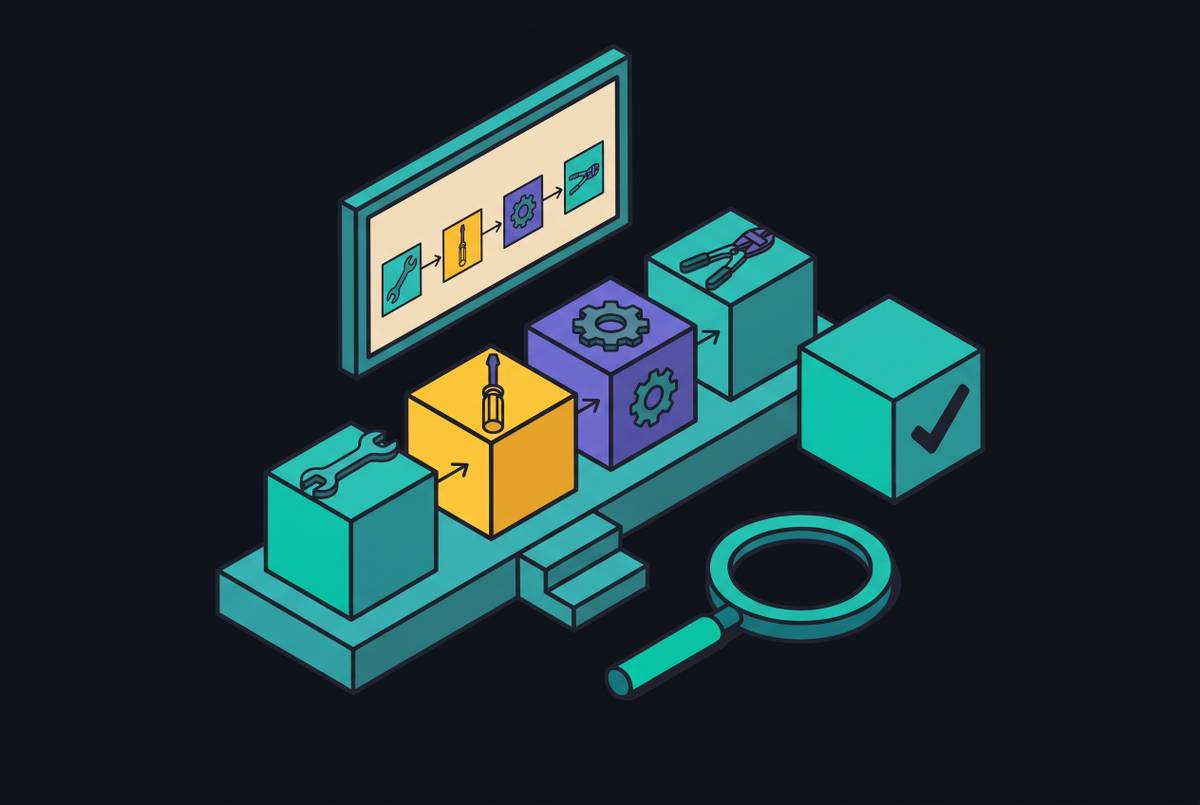
The fourth layer is per-tool CI regression evaluation. A single eval prompt per tool can catch interface drift, but the scored unit must be the state transition. Each evaluation should check node-input correctness, node-output correctness, edge-routing correctness, and checkpoint-replay determinism. In practice, that means checking whether the node received the expected state, whether its update respected the channel schema, whether the router selected the correct branch, and whether replay reproduced the downstream trajectory. Together, these layers cover the gaps left by schema validation, error handling, retry control, or answer evaluation used alone.
How to replay historical traces against assertions to build a durable regression harness
A checkpoint at every node transition makes production state available for replay. The useful record includes the request, tool call, response, and outcome at each step. Precision changes the investigation. “The agent failed” gives little direction, while a trace showing that the CRM server returned a stale record at a specific time and the agent trusted it identifies the boundary to examine. Replay preserves the state, inputs, and upstream history needed to turn that event into a regression case.
To build that case, capture the exact production checkpoint and inject it into a local or staging environment. Then step through the graph to isolate the node that dropped the payload or accepted invalid data. The first task is locating the broken transition. Once an assertion addresses that boundary, replay the same trace to establish that it catches the original failure. Add the trace to the regression set so every future change tests the assertion against the event that justified it.
Deterministic replay must itself be evaluated even when a checkpoint exists. The harness should replay tool calls deterministically and check whether the saved state leads to the same downstream trajectory. A changed route can be a regression even when the final answer remains acceptable. Scoring the transition shows that difference without depending on how the assistant words its response.
The harness gives the team golden tasks based on production traces, tool-call replay they can repeat, clear scoring rubrics, and a CI gate. It also makes execution cost testable. If average step count grows materially after a prompt change, cost and latency rise proportionally even when success rate stays constant. A step-count regression therefore belongs in the evaluation record rather than being dismissed as an implementation detail.
That record supports a controlled improvement loop. Production signals refine evaluations, which guide program optimization before sandbox replay and regression testing. Controlled deployment then supplies new production signals. Each iteration tightens the harness around observed behavior instead of expanding it through guesses about possible failures. Historical traces become tests that last because teams can use the same evidence when prompts, tools, routing conditions, or framework versions change.
Turning recurring failure patterns into continuous regression coverage
Live traffic supplies the next regression cases. Repeated user corrections to the same answer should become a new test, while traces showing the wrong tool choice should become a trajectory check. When product analytics show drop-off at one workflow step, teams should use that scenario for replay. Each signal points to a different kind of evidence. Converting it into a specific assertion preserves the distinction instead of reducing every symptom to an undifferentiated failed run.
Teams should keep routing accuracy as a first-class metric for each decision node throughout that process. A drifting router prompt may be fixable with one prompt edit, but an end-to-end success average can hide where the drift began. Diagnosis must be equally specific. The harness should report the root cause, evidence, confidence, and proposed fix, so an engineer can distinguish a bad payload from an incorrect route or uncontrolled retries. A failure flag alone does not provide that attribution.
Proposed improvements also need to be reviewable. An engineer should be able to inspect a change to a prompt, tool description, or routing condition and understand why the trace analysis suggested it before shipping it. Black-box auto-fixes undermine that requirement because their reasoning cannot be audited. Replay supplies the evidence for the proposed change, while regression evaluation tests its effect. Neither replaces review.
Framework changes will recur, so harness engineering deserves the same rigor as code review and testing. CI evaluations for each tool and saved production traces let teams test the next change before they deploy it. The lasting asset is an executable set of tool contracts, routing expectations, retry controls, and replayable cases that engineers can inspect, extend, and run with every release.